Friday, 20 November 2015

Sunday 15th: the day off

Sunday was our time off, so we planned to do some tourist activities before we left Caracas. We took the metro down to the city center with Jesús to do some sightseeing. He wanted to show us Simón Bolivar's house, Casa natal. Simón Bolivar played an important role in the establishment of Venezuela as a independent state free of the Spanish rule.


                            A statue of Simón Bolívar on his horse, in the Bolivar square. The size of the city determines the size of the statue. This is as big as it gets

The Bolivar square in the city of Caracas has the only apperance of black squirrels

Inside Bolivar's house. The paintings on the wall was added to the museum long after his death

Taking a break in the museum

Einar in front of the tree were Bolivar himself once stood


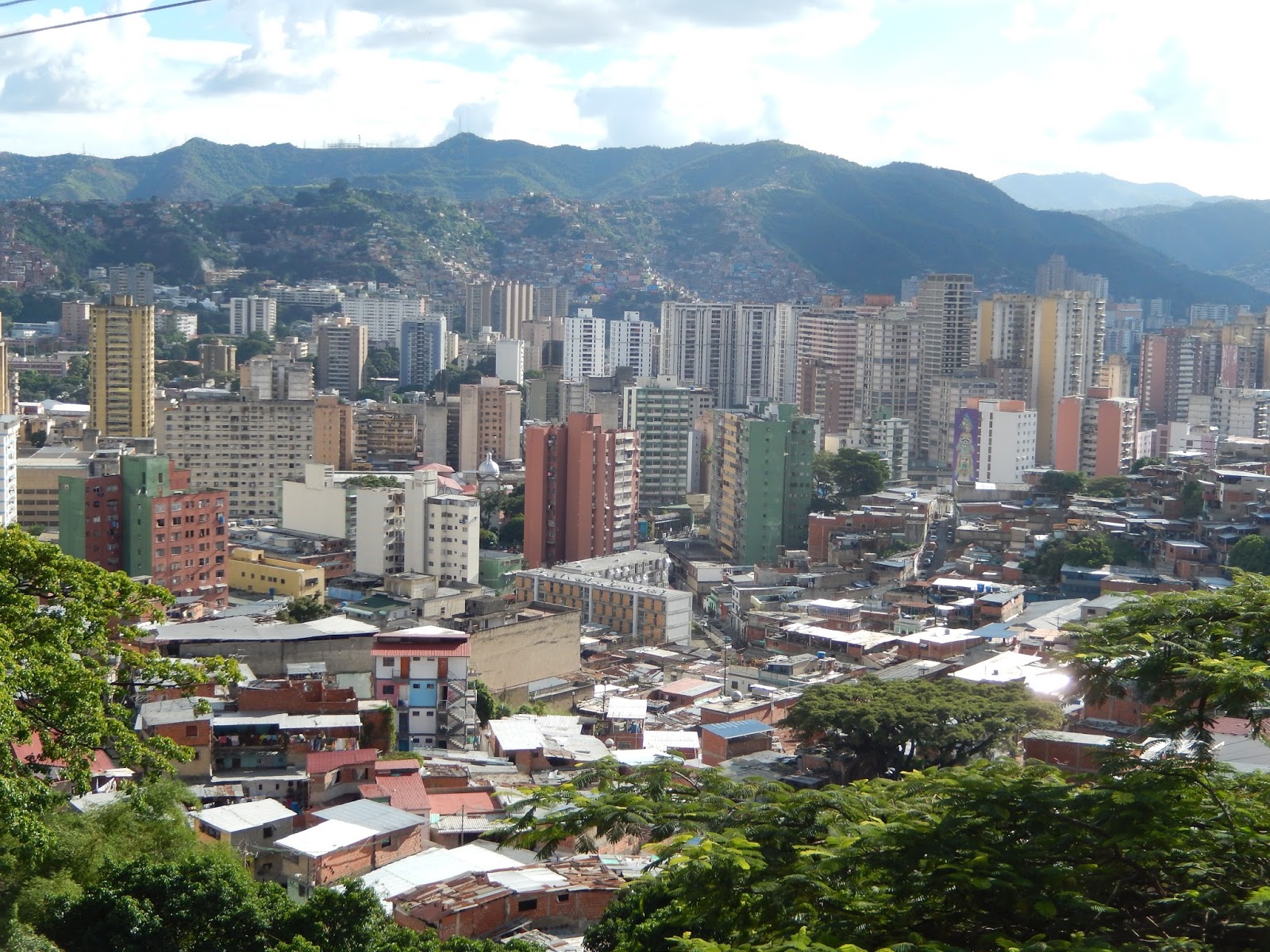
Then we went to a beautiful park with a view over the city center. 


Then suddenly Jesús got a call from the  guard at the botanical garden. He said that some kids had tried to steal some things through a hole in the window with a wooden stick. We had to run home and check if something was missing, but luckily everything was still there so we went out an ate dinner.

We had a fantastic stay in Caracas with both lichens and the people we have met. The experience was all over amazing. A special thanks to Jesús, Mariana, Maria Fernanda, Miguel, Christopher, Estefania and of course the lovely people at the botanical garden.

Group photo from the day of the workshop

The last thing we had to do that day was to sample tissue from some of our lichens for later DNA sequencing. This is not always easy for new untrained master students, specially when you're not in a lab, but it all went well and we learned something new. 


NEXT UP: BRAZIL!

Thursday, 19 November 2015

Saturday 14th: the Day of Bad Luck

Now we know, the day of bad luck is not Friday 13th, it's Saturday 14th!

The locality for the day was Henri Pittier National Park, a 2 hours ride west of Caracas.

Park entrance

At the park entrance, we were checked by the National Guard, who soon found out that we were not carrying our passports, a serious crime - the military needs to know who everybody are, of course. We were taken into custody and mentally preparing for some days in jail. Luckily 3000 B's saved the day.

Sad Norwegian team pondering their destiny

The gate to the area of the park that we planned to visit was locked and a telephone call made it clear the guard was suddenly taken to hospital. We were met by a little dog, however, and allowed to circumvent the fence. All dogs are nice in Venezuela and some become your friend for the day.


The gate to the trail was also locked, but not difficult to climb.


Then we needed something in the car, some of us went back, broke the car key when trying to open the trunk, and Miguel and Mariana had to go all the way back to Caracas (in the other car, we had two) to get the extra key. Took them four hours.


The locality was nice, but probably a bit too dark for most Phyllopsoras. We made some 30 collections. The very last tree, at the place where we turned, was in fact the most interesting: Eschatogonia angustiloba (s. lat.).


Having just passed the National Guard control post, the car refused to go. It took a couple of hours to cool down the engine, switch the plugs, switch battery with the other car (the first cars battery was flat from having emergency lights on), start the engine, and switch back the battery.


Dinner

Friday 13th: The Workshop

Friday 13th was the day for the workshop and a talk at the institute. The subject was taxonomy and phylogeny of the Ramalinaceae, especially the 'phyllopsoroid' genera.


We were twelve people, looking at the morphological characters used for distinguishing Phyllopsora species, looking at asci stained with iodine, ascospores and cortex types for distinguishing similar genera (Bacidiopsora, Eschatogonia, Krogia), and - the big event - setting up thin-layer chromatography for identifying lichen substances.


See the tank on the table in the background


Here is the second plate. Most surprising was track 17: norstictic acid  - diagnostic of Phyllopsora imshaugii, previously only known from the summit area of the Blue Mountains in Jamaica! (Well, we know a few others, unpublished). Need to study it more closely, though. Tracks 1-3, 5, 18-19 are furfuraceic acid, diagnostic of P. furfuracea and a few others. There are two chemotypes of P. buettneri in our collections: tracks 11-12 (vicanicin, zeorin) and 13 (pannarin, phyllopsorin, zeorin). Track 16 is methyl barbatate (top) and an unknown compund (below), i.e. P. glaucescens. The other tracks are mostly references.

Another great discovery when going through herbarium material: The genus Krogia new to South America! The species, K. antillarum, is published from the Dominican Republic, Haiti, Jamaica, and Trinidad and Tobago - but we also know it from Mexico and Guatemala. There were two collections from Venezuela stored under Phyllopsora in VEN, but, sorry, I forgot to take photos. See photos, etc. at our Krogia-site: nhm2.uio.no/lichens/Krogia.


Relaxing after the workshop

Kermit,our guest researcher

Thursday 12th: Macarao National Park


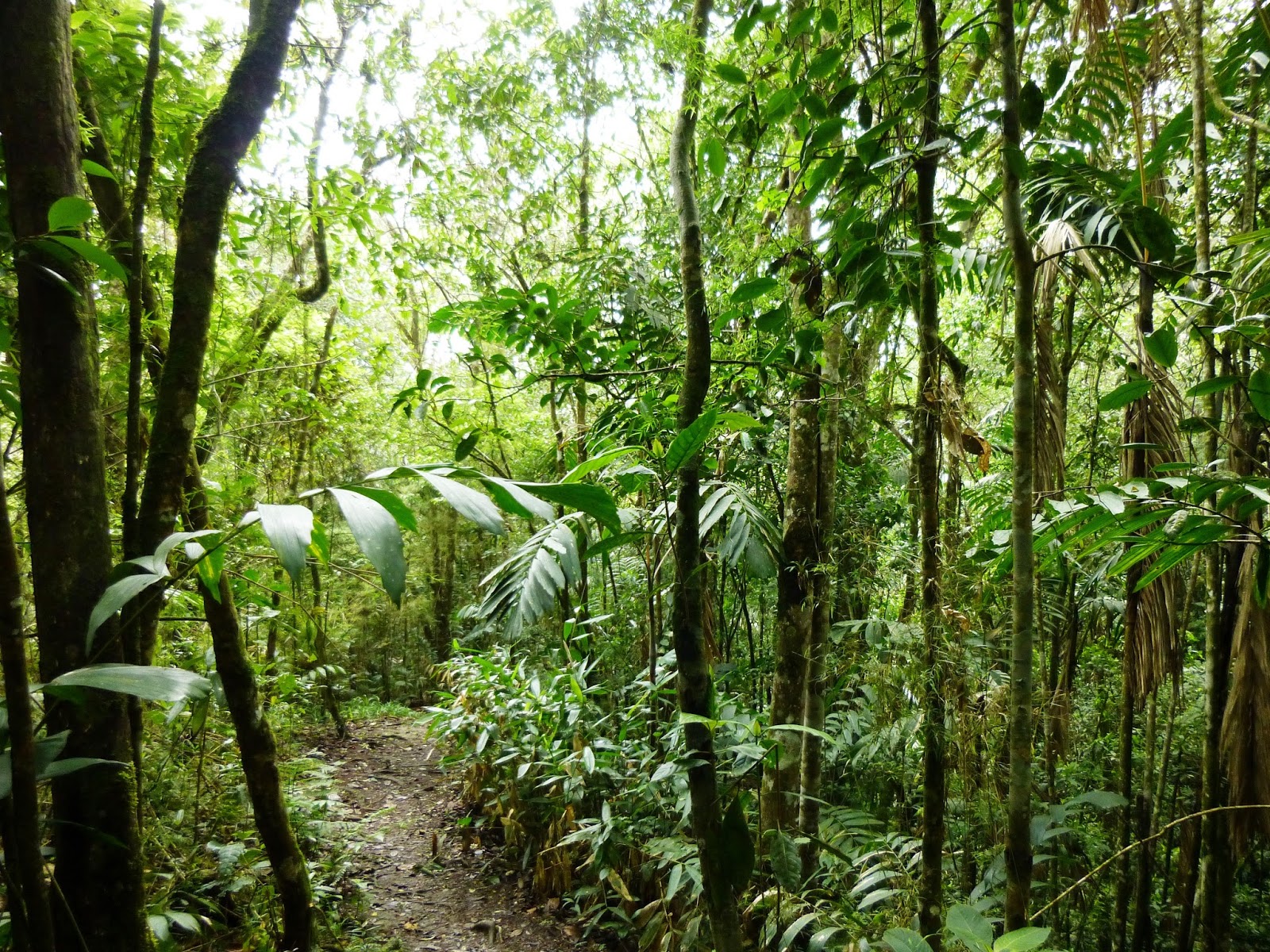
Thursday’s field trip took us to the Macarao National Park. As always greeted by a few dogs, we made our way into the rainforest there to find more material. The forest was not very dark, so that we found Phyllopsora on almost every tree.

Macarao National Park

The team of the day

We found many interesting specimens; among others Phyllopsora buettneri, P. ochroxantha and P. imshaugii. We were not aware of the latter, though, before doing TLC. So this was a nice surprise!

Phyllopsora buettneri
 
Phyllopsora ochroxantha

Just before a big rain shower started to pour down, we managed to retreat back into the car and stopped for a delicious lunch with chicken and lots of other unknown specialties and some tasty strawberry smoothie.

After having gained new strength and the rain had stopped, we continued a bit further up the road and stopped on the roadside to enter a dense forest. Unfortunately, it was a bit too dark for finding Phyllopsora (though we managed to discover some). However, we found something else which had not been reported from Venezuela yet: Crustospathula amazonica!

Crustospathula amazonica


Friday, 13 November 2015

Wednesday 11th: Top of the mountain, Waraira Repano National Park

After Tuesdays great day in the field, we were excited to go to the next locality Waraira Repano National Park. To get to the park we had to take a cabel car over the Venezuelan coastal mountain range, Cordillera de la Costa, which separates the city of Caracas from the Caribbean Sea.


                           View from the cabel car

                            Having a good time with our new friends


                            On the top with the Caribbean Sea in the background.

The national park had a very varied vegetation. The terrain was steep and we walked across a gradient from open light areas to dense dark forest. At the beginning of the hike we took a wrong turn and luckily we found a Bacidiopsora. On a wet hillside Einar found a Phyllopsora on a rock! This made our day, because this is not seen that often. In the darker dense forest we found P. byssiseda. Unfortunately, we did not get a chance to take any pictures of the lichens we found, because of the lack of light. But they were beautiful!

                          Malin in the field

                          The dense and foggy tropical forest

                           Christopher, one of member of the Venezuelan lichen group

                           Here are some of the lichen hunters.


Tuesday 10th: The first day in the field, El Volcan

After much trouble (Lufthansa on strike) we finally arrived in Caracas, Venezuela. We got a great welcome from Professor Jesús Hernandez and his students from the Jardín Botaníco de Caracas. This is also the place that we are going to stay during our week in Caracas.

Tuesday was our first day in the field. We went to El Volcan, which is, like all of the other localities, a tropical rainforest. Here we hoped to find a lot of Phyllopsora and other closely related genera. And happily we did. This locality was full of old tree trunks, closed but not very dark, a typical Phyllopsora habitat. Phyllopsora, Physcidia, Eschatagonia triptophyllina was some of the species we were excited to find, specially Einar.

                       Making our way into the forest

                        Anne Karin and Einar looking at a Phyllopsora

                        We found a lot of Phyllopsora furfuracea

                        On the top of El Volcan we had a great view over Caracas


Friday, 6 November 2015

First stop will be Caracas, Venezuela, where we will collect not far from the hunting grounds of Augustus Fendler (1813-1883) who lived in Colonia Tovar between 1854 and 1858. Being a professional plant collector, he collected thousands of specimens and sold them to museums in North America and Europe. Two species based on his collections are of particular interest to us: Biatora fendleri and B. prasina, currently known as Phyllopsora fendleri and P. pertexta. Very few recent collections exist, and we need to extract DNA. Read more about this fascinating botanist in the paper by Todzia (1989).

Phyllopsora fendleri, Venezuela (B 60-0035875).
Phyllopsora pertexta, Jamaica (H).